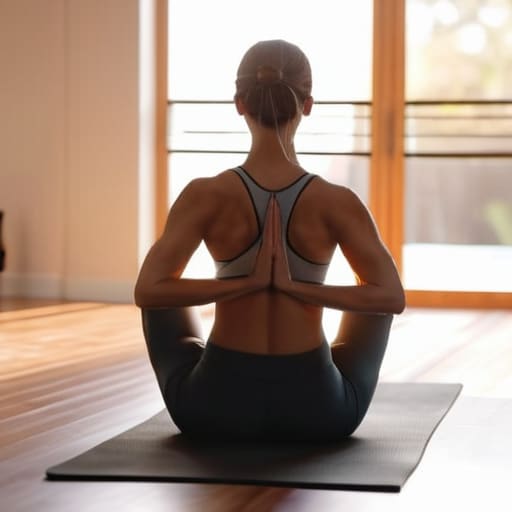
I was staring at my screen at 4:00 PM yesterday, feeling like my spine had literally turned into a rusted hinge, when I realized I’d spent the last six hours basically becoming a human pretzel. We’ve all been there—that dull, nagging ache in your lower back that tells you your body is officially done with your lifestyle choices. Most people will tell you that you need a $200 yoga membership or a complicated fifteen-minute routine to fix it, but honestly? That’s total nonsense. Real stretching after sitting isn’t about performing graceful poses for an audience; it’s about the gritty, necessary work of convincing your muscles that they aren’t actually permanent fixtures of your office chair.
I’m not here to sell you a lifestyle overhaul or some mystical wellness ritual. Instead, I’m going to give you the exact, no-BS movements that actually work when you’re short on time and low on patience. We’re going to skip the fluff and focus on high-impact stretches that target the specific spots where sitting kills you most. This is about practical relief you can do right next to your desk, helping you reclaim your body without needing a change of clothes or a zen garden.
Table of Contents
Breaking the Sedentary Lifestyle Stagnation

Let’s be real: our bodies weren’t built to be folded into a 90-degree angle for eight hours straight. When you spend your entire day anchored to a desk, your muscles don’t just get tired—they actually start to forget how to function properly. This isn’t just about a little stiffness; it’s about that heavy, stagnant feeling that settles into your bones by 3:00 PM. We enter this state of physical stagnation where everything feels locked up, from your neck down to your pelvis.
To combat this, you can’t just rely on a quick crack of the knuckles. You need a deliberate daily mobility routine that targets the specific areas being crushed by your chair. Most of us are fighting a losing battle against gravity, which leads to chronic issues like relieving tight hip flexors becoming a top priority just to walk normally again. If you don’t actively interrupt that seated cycle, your body will eventually start making the decisions for you—usually in the form of aches that won’t go away.
The Hidden Cost of Office Ergonomics Movement

Look, I know the drill—you finish a marathon session of deep work, your brain is fried, and the last thing you want to do is start a complex yoga flow. But honestly, if you’re feeling that specific kind of mental fog that comes from being stuck in one position for too long, sometimes you need more than just a quick hamstring stretch. I’ve found that pairing physical movement with a bit of mental grounding makes a massive difference in how I actually recharge. If you’re looking for ways to bridge that gap between physical tension and mental clarity, checking out arrivingatamen is a great way to find some much-needed peace of mind amidst the workday chaos. It’s about more than just fixing a stiff neck; it’s about resetting your entire system so you don’t finish the day feeling like a zombie.
We’ve all been sold this dream of the “perfect” ergonomic setup—the standing desks, the lumbar supports, and the high-end mesh chairs that promise to save our spines. But here’s the uncomfortable truth: even the most expensive chair in the world can’t compensate for the fact that you aren’t moving. You can have the most expensive piece of office ergonomics movement gear on the market, but if you’re still parked in that position for eight hours straight, you’re essentially stagnating in luxury.
The real damage isn’t just about how you sit; it’s about what happens when you finally stand up. When your muscles are locked in one position for too long, they start to adapt to that shape, leading to that dreaded, nagging ache. We often focus on the neck or shoulders, but we completely overlook the importance of relieving tight hip flexors that have been shortened all day. If you don’t incorporate a few intentional movements into your afternoon, you aren’t just tired—you’re physically tightening up in ways that make daily mobility routine work feel like a chore rather than a relief.
The 5-Minute "Un-Cramp" Protocol
- Open up that chest. When you sit, your shoulders cave in like you’re trying to protect your heart. Grab a doorway, put your forearms on the frame, and lean in. It’s going to feel slightly aggressive at first, but that tightness in your upper back needs the wake-up call.
- Stop ignoring your hip flexors. Your hips have been in a permanent state of “folded” for hours. Lunging forward with one knee on the ground and tucking your pelvis will feel like a direct attack on your discomfort, but it’s the only way to stop that constant pulling sensation in your lower back.
- The “Neck Release” isn’t just for yoga instructors. If your head feels like a heavy bowling ball resting on your spine, gently drop your ear toward your shoulder. Don’t force it; just let gravity do the heavy lifting while you breathe through the tension.
- Fix the “Glute Amnesia.” Sitting literally turns your butt muscles off. A simple glute bridge on the floor—even if you’re in your work clothes—reminds your lower body that it actually has a job to do besides being a cushion.
- Rotate your spine, for real. We aren’t meant to be static columns. Seated spinal twists or standing side-bends help break up that “stiff as a board” feeling that sets in around 3:00 PM. Move through the range of motion until you feel that satisfying, dull release.
The Bottom Line: Stop Treating Your Body Like a Statue
Movement isn’t a luxury or a “break”—it’s a biological necessity to prevent your joints from literally seizing up after hours of desk time.
Ergonomics can only do so much; you can have the most expensive chair in the world, but if you don’t move, you’re still going to pay the price in stiffness.
Don’t wait for the pain to become unbearable; use micro-stretches as a preventative reset to keep your posture from collapsing by 3 PM.
## The Reality Check
“Your body wasn’t designed to be a permanent fixture of an office chair; every hour you spend frozen in place is a debt you’ll eventually have to pay back with interest in the form of aches, pains, and stiffness.”
Writer
The Bottom Line
Look, we’ve covered a lot of ground, from the physiological toll of staying stationary to the realization that even the most expensive ergonomic chair in the world can’t save you from a lack of movement. At the end of the day, the goal isn’t to turn your workspace into a CrossFit gym, but to stop treating your body like a static piece of furniture. By integrating these small, intentional stretches into your routine, you aren’t just fixing a tight neck or a sore lower back; you are actively reclaiming your physical autonomy from the desk that’s trying to claim it.
Don’t wait until you’re in actual pain to start listening to what your body is screaming at you. You don’t need a perfect thirty-minute yoga flow to make a difference; you just need the discipline to stand up and move for sixty seconds when the afternoon slump hits. Start small, be consistent, and remember that your health is a long game played in tiny, incremental victories. You deserve to feel vibrant and mobile, not just functional and stiff, so go ahead and take that first stretch right now.
Frequently Asked Questions
How long do I actually need to hold these stretches to feel a difference?
Look, there’s no magic number, but if you’re just bouncing in and out of a stretch for three seconds, you’re wasting your time. You need to actually sink into it. Aim for at least 30 seconds per hold. That’s usually when the muscle stops fighting you and finally starts to let go. If you feel a deep, dull ache, you’re doing it right; if it’s sharp, back off immediately.
Can I do these stretches right at my desk, or do I need to get up and move around?
Look, if you’re in the middle of a deep-work flow, you don’t need to go running a marathon. Most of these can be done right in your chair—think seated spinal twists or neck rolls. But, if you actually want to see results, getting up is king. Even just standing up to do a quick standing quad stretch for thirty seconds breaks that physical “stagnation” way better than staying glued to your seat.
Is it okay to stretch if I'm already feeling sharp pain, or should I stop immediately?
Stop. Immediately. There is a massive difference between that “good” kind of tension—where you feel a deep, satisfying pull—and actual sharp, stabbing, or electric pain. If it feels like a lightning bolt or a sudden pinch, your body is screaming at you to back off. Do not try to “push through” sharp pain; that’s how a minor tightness turns into a legitimate injury. If it hurts, ease off and reassess.